
Are Contract Research Organizations Best for Preclinical Research? A Smarter Alternative.



When planning preclinical research, many early-stage and emerging biotech companies default to outsourcing studies to contract research organizations (CROs). In this model, the CRO executes the in vivo work on your behalf—running studies, managing protocols, and delivering data to support early-stage drug development.
But outsourcing is not the only path. For teams focused on speed, control, and data quality, relying entirely on a CRO can introduce tradeoffs that impact timelines, costs, and confidence in results.
Before committing to a CRO, it is critical to assess whether fully outsourcing study execution aligns with your need for direct oversight, rapid iteration, and confidence in the data used to advance your program.
Article Contents
- What is a Contract Research Organization (CRO)?
- Where CROs Can Fall Short in Preclinical In Vivo Research
- What Preclinical In Vivo Research Requires to Succeed
- A Smarter Alternative: The Contract Vivarium Model
- Contract Vivarium vs. CRO Outsourcing
- Why Teams Are Moving Beyond CROs
What is a Contract Research Organization (CRO)?
A contract research organization (CRO) conducts preclinical research on behalf of biotech and life sciences companies, generating data to support drug development prior to clinical trials.
In this model, studies are outsourced to an external team. CROs provide infrastructure, technical execution, and reporting, allowing companies to avoid building internal capabilities.
CROs are widely used across therapeutic areas including oncology, immunology, and cell and gene therapy. While they offer access to expertise and capacity, the model can limit visibility into day-to-day study execution and reduce flexibility when programs need to adapt.
Where CROs Can Fall Short in Preclinical In Vivo Research
Preclinical in vivo research is highly iterative. Study design, dosing, and endpoints often evolve in real time based on emerging data. In outsourced models, this can create friction.
Common challenges with CROs include:
For early-stage and translational programs, these constraints can slow progress and introduce risk at critical inflection points.
What Preclinical In Vivo Research Requires to Succeed
Across therapeutic areas, effective preclinical in vivo research depends on a consistent set of capabilities:
A Smarter Alternative: The Contract Vivarium Model
A contract vivarium offers a different approach to preclinical in vivo research
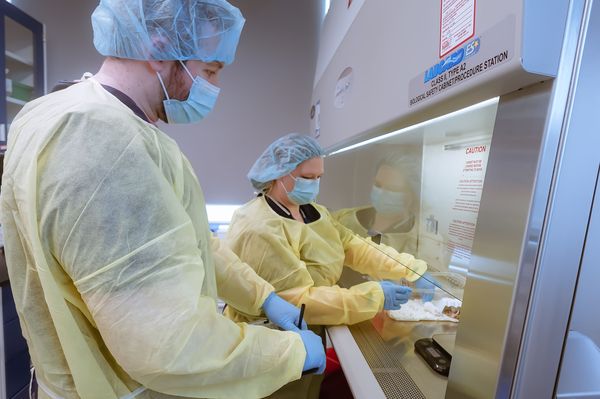
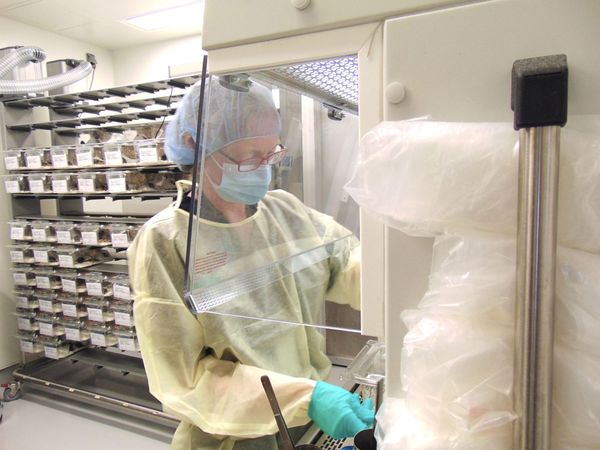
Instead of outsourcing in vivo studies to a CRO, biotech teams conduct their own rodent studies within professionally managed, AAALAC-accredited vivarium facilities. The infrastructure, animal care, veterinary oversight, and compliance are provided, while scientific control remains fully with the research team.
This model combines the advantages of in-house research with the operational support typically associated with CROs.
With a contract vivarium, teams can:
- Run studies directly in fully equipped in vivo research environments
- Maintain control over study design, execution, and interpretation
- Adapt experiments in real time without external delays
- Generate consistent, decision-grade data in controlled conditions
- Scale from early proof of concept through later-stage studies in the same environment
Contract Vivarium vs. CRO Outsourcing
While CROs remain valuable for regulated and specialized studies, many preclinical in vivo discovery and proof-of-concept programs benefit from environments where scientists maintain direct involvement in study execution and interpretation. The contract vivarium model enables research teams to conduct studies within controlled facilities while avoiding common limitations of outsourced research pipelines.
| Feature | Contract Vivarium Model | Traditional CRO Model |
|---|---|---|
| Study Execution | Scientists conduct and oversee their own studies | Studies executed by external CRO teams |
| Flexibility to Pivot | Immediate protocol adjustments and study iteration | Changes often require study redesign or contract amendments |
| Hands-On Study Management | Continuous observation of animal models | Limited direct interaction with studies |
| Control of Timelines | Research schedules controlled by the internal team | Study timelines dependent on CRO availability |
| Expertise in Proprietary Study Designs | Direct handling of proprietary or novel research programs | Standardized CRO workflows may limit expertise |
 Scientists conduct and oversee their own studies
 Studies executed by external CRO teams
| Contract Vivarium Model | Traditional CRO Model | |
|---|---|---|
| Study Execution | Scientists conduct and oversee their own studies | Studies executed by external CRO teams |
| Flexibility to Pivot | Immediate protocol adjustments and study iteration | Changes often require study redesign or contract amendments |
| Hands-On Study Management | Continuous observation of animal models | Limited direct interaction with studies |
| Control of Timelines | Research schedules controlled by the internal team | Study timelines dependent on CRO availability |
| Expertise in Proprietary Study Designs | Direct handling of proprietary or novel research programs | Standardized CRO workflows may limit expertise |
Why Teams Are Moving Beyond CROs
This shift is particularly relevant for venture-backed companies, where generating high-confidence in vivo data early can directly impact funding, partnerships, and progression toward IND.
Learn More About Mispro’s Contract Vivarium
“Our experience working with Mispro has surpassed our previous experiences with CROs in every way. We have accelerated timelines, produced robust and reproducible datasets, all while reducing infrastructure and overhead costs. Without a doubt, I can say that Mispro is an extremely efficient choice for preclinical R&D." - Sr. In Vivo Scientist
Whitepaper Download: Minimize Risk for Your Preclinical Research
Learn how a full service contract vivarium can support your preclinical research.
Find Lab Space Today
Choose a smarter, more flexible path for your preclinical research.